
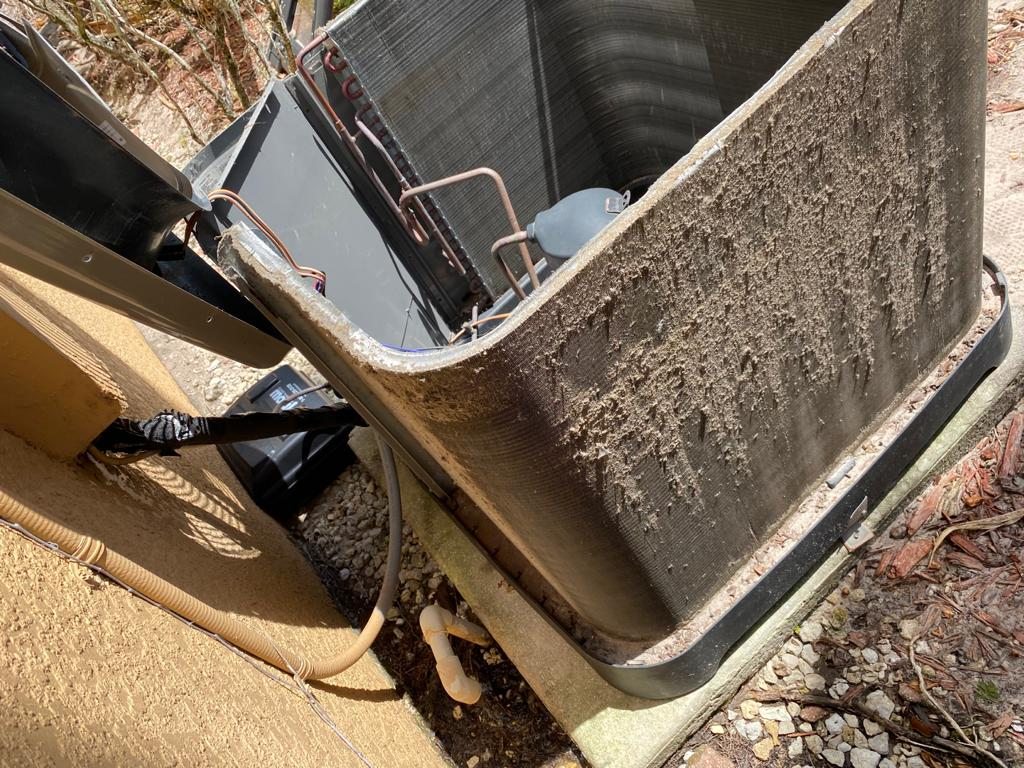
Blocked condenser
The system runs longer, the bill climbs, and the compressor takes the strain.
A full annual AC service, plus a visual corrosion check of accessible plumbing fixtures throughout the property. One visit, both systems.
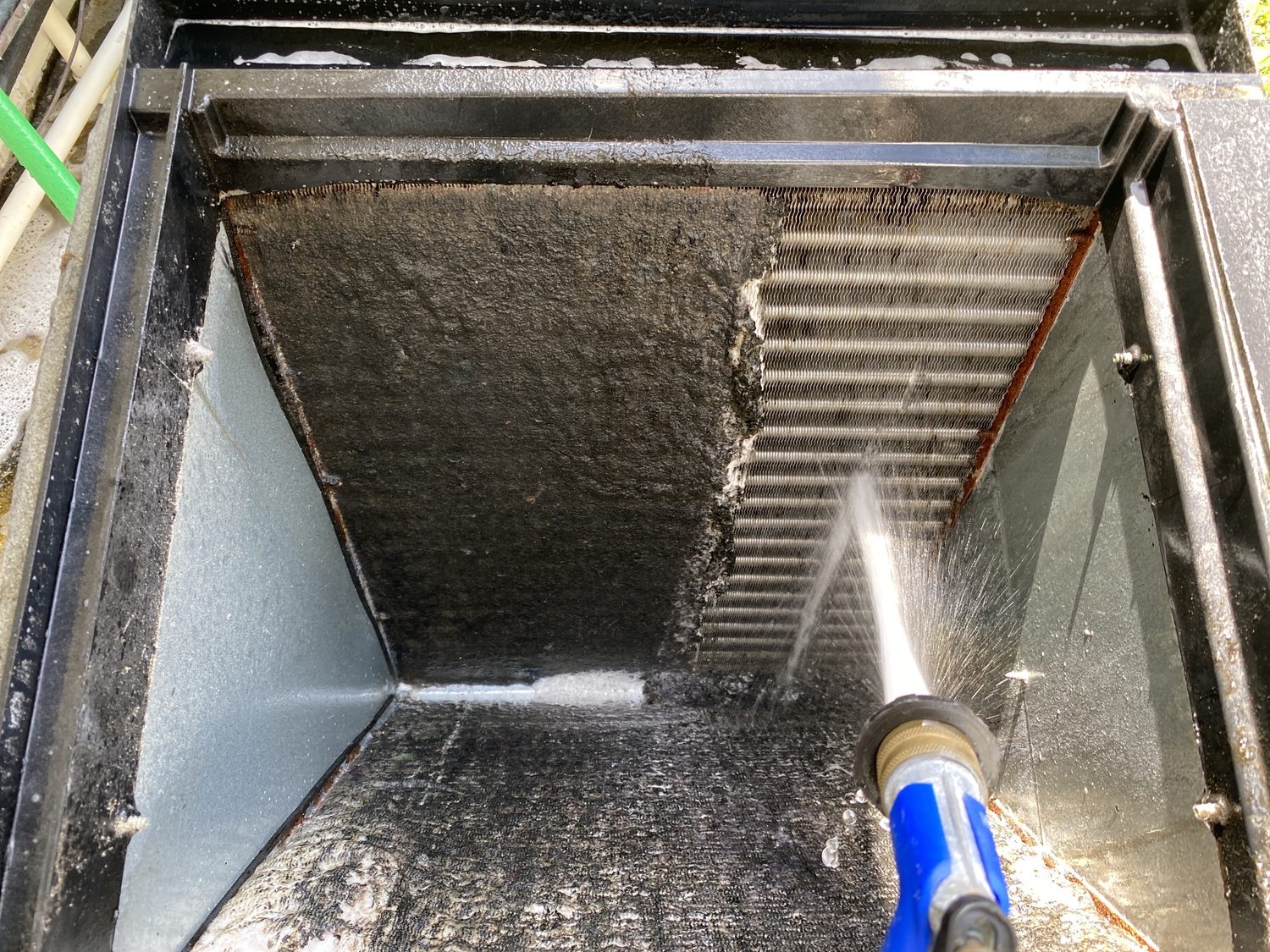
A clogged condensate drain doesn't announce itself. It shows up later, in the ceiling.
Conditions documented by our technicians on past service calls. They show what can happen — not a promise that every issue will be found or prevented.
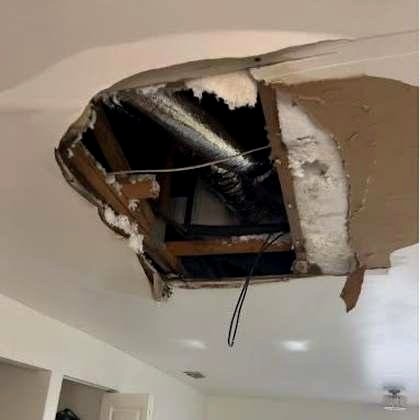
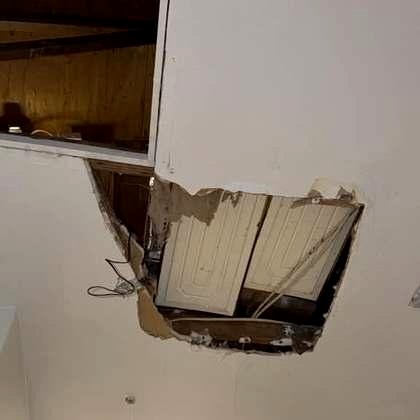
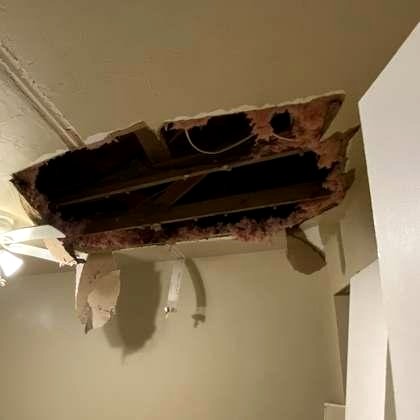
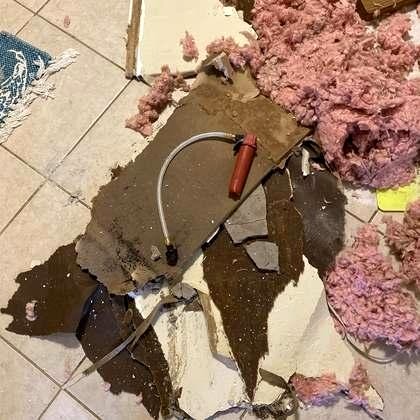
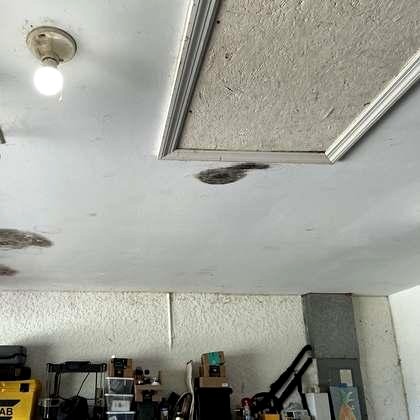
Algae and debris can clog the condensate drain line, and the water then has nowhere to go but out of the pan.
The Florida Building Code requires a backup — a secondary pan, or a float switch that shuts the system off. That switch only helps if it is installed, wired and tested. If it isn't, water can keep running into the ceiling, the floor below, and the walls and baseboards.
The EPA advises keeping drain lines unobstructed.
What we do about it on every visit: flush the condensate drain line, inspect the primary and secondary pans, and test the float switch operation.
Nothing is infallible, but regular maintenance lowers the risk.
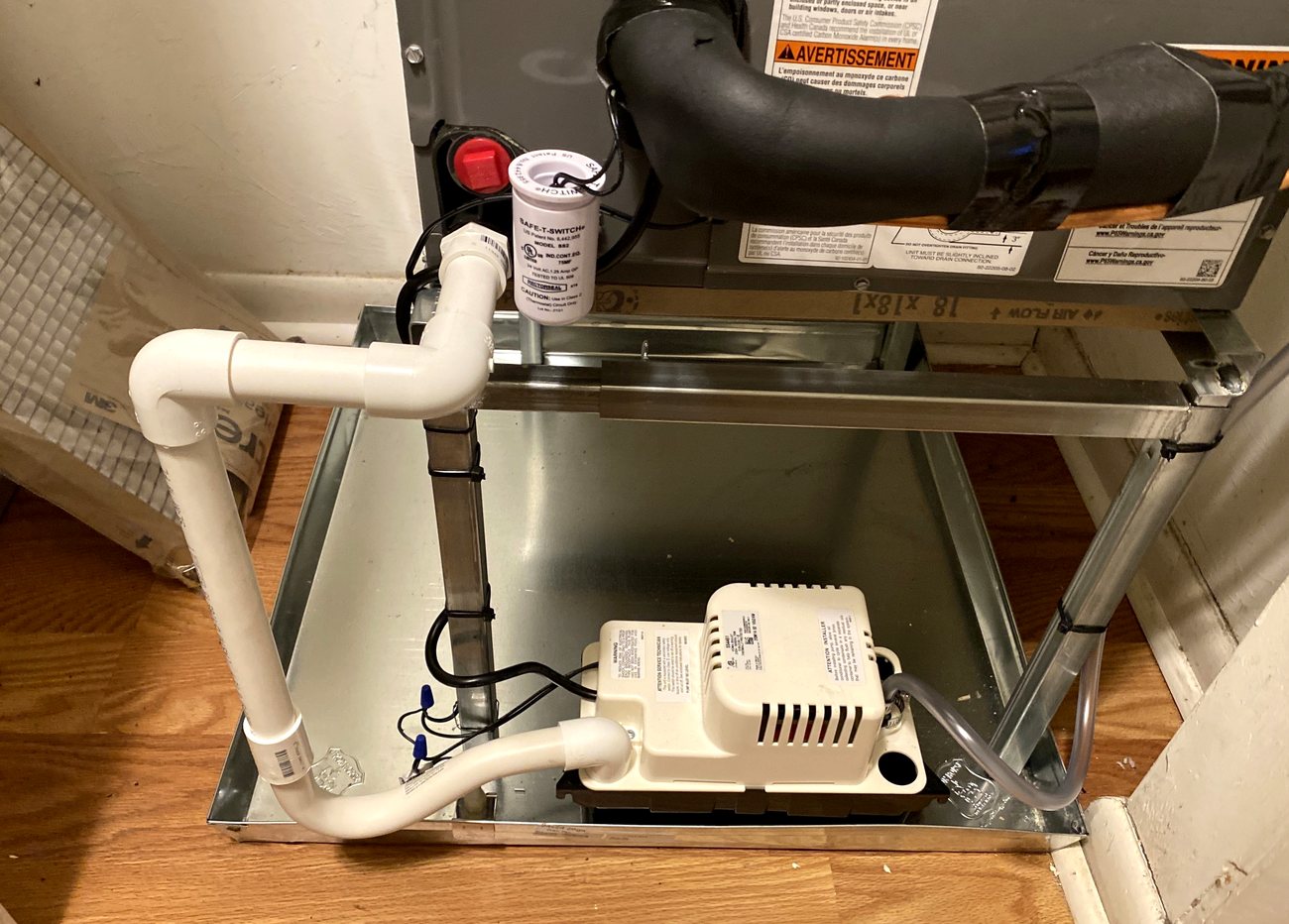
Pan, pump and float switch — the three things that keep condensate out of the ceiling.
Plan before next summer
A yearly visit shows whether anything should be done before the cooling season: duct cleaning, duct repairs, or a deep coil cleaning. Doing it in the cooler months means it can be scheduled, not rushed in an emergency.
Small problems, found early
Worn capacitors, loose connections, weak airflow and refrigerant readings outside range can show up before a breakdown, when they tend to cost less to address.
Sources: U.S. Environmental Protection Agency, “A Brief Guide to Mold, Moisture, and Your Home,” epa.gov · Florida Building Code, Mechanical, Section 307.2.3 (Auxiliary and Secondary Drain Systems) · Warren Forensics, “The Condensate System — An Important Item in Routine HVAC Maintenance,” warrenforensics.com.
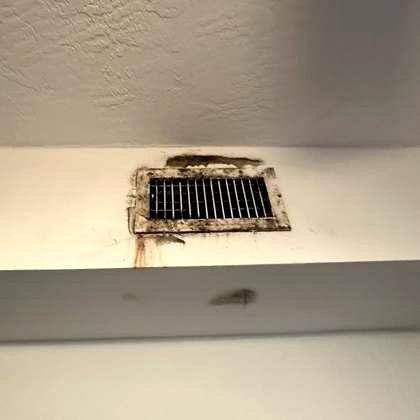
A drain restriction, a loaded filter, early water staining at a vent — easy to miss until the day it isn't. A planned visit is a better moment to find them than an emergency call.
01 · Catch it early
Flush the drain line and check the pans for the conditions that lead to overflows and ceiling damage.
02 · Check the system
Review electrical parts, coil condition, refrigerant readings and airflow — with the numbers written down.
03 · Plan ahead
Flag visible corrosion at plumbing fixtures and other concerns before they turn into costly damage.
The $99 visit focuses on condensate safety, cooling performance and visible wear. Here is the actual task list, grouped by system.
Drain & water safety
Indoor equipment
Refrigerant check
Outdoor condensing unit
Performance & airflow
Property-wide plumbing check
Visual check of accessible areas only. Hidden pipes and internal conditions are excluded; repairs are quoted separately.
We'd rather tell you up front than surprise you on the invoice. These are evaluated during the visit and quoted before any work starts:
Refrigerant is not included in the base service. Any adjustment is confirmed with you before the work is done.
A pull-and-clean is recommended only when the coil condition warrants it — and that is decided during the visit, with you looking at it.
Winter · scheduled
$245
Summer · emergency
$285 – $350
Photographs from prior Innova service calls. They show what can go wrong — not a promise that every issue will be found or prevented.
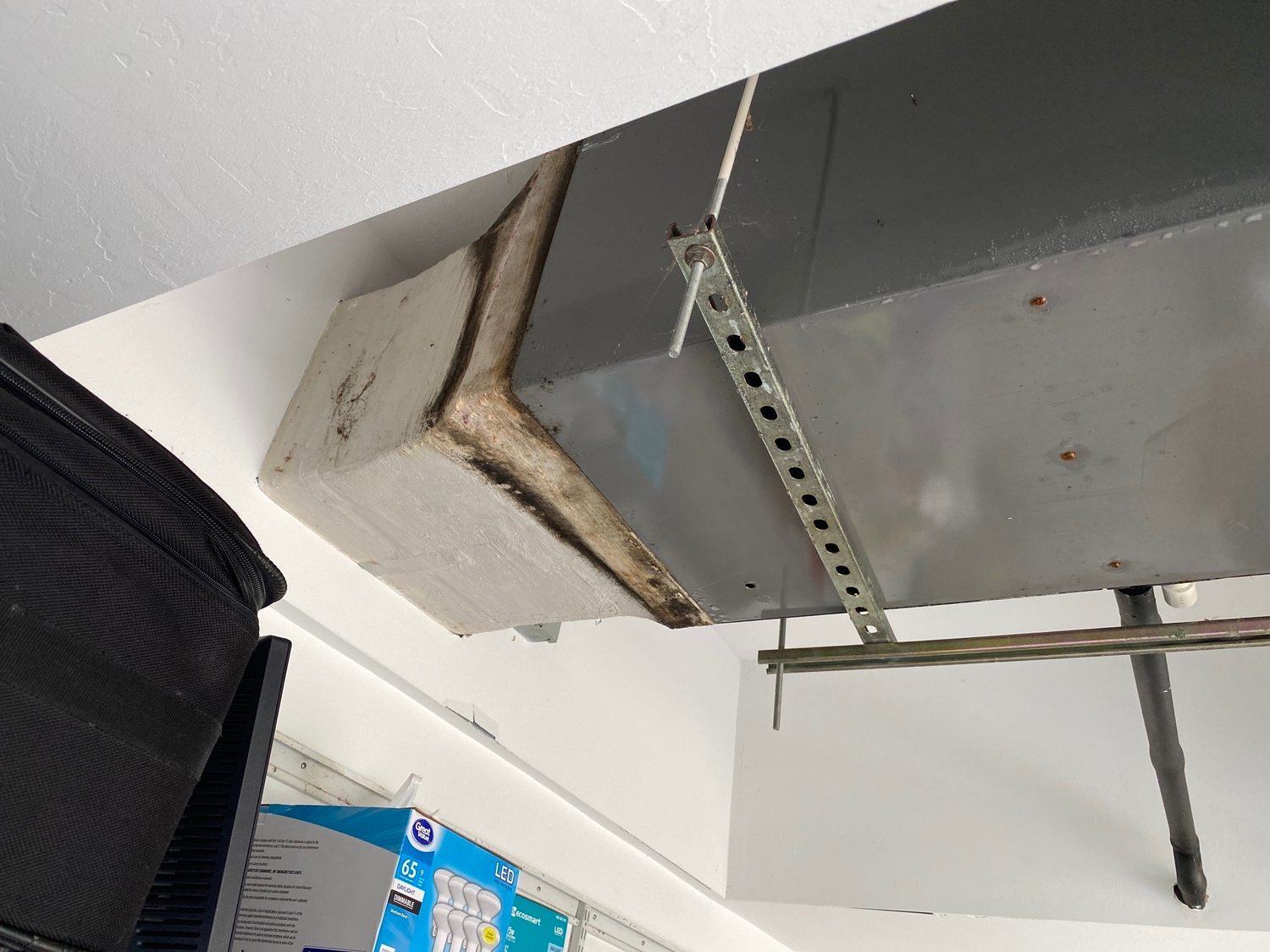
The system runs longer, the bill climbs, and the compressor takes the strain.
A moisture and airflow warning — visible long before the ceiling gives way.
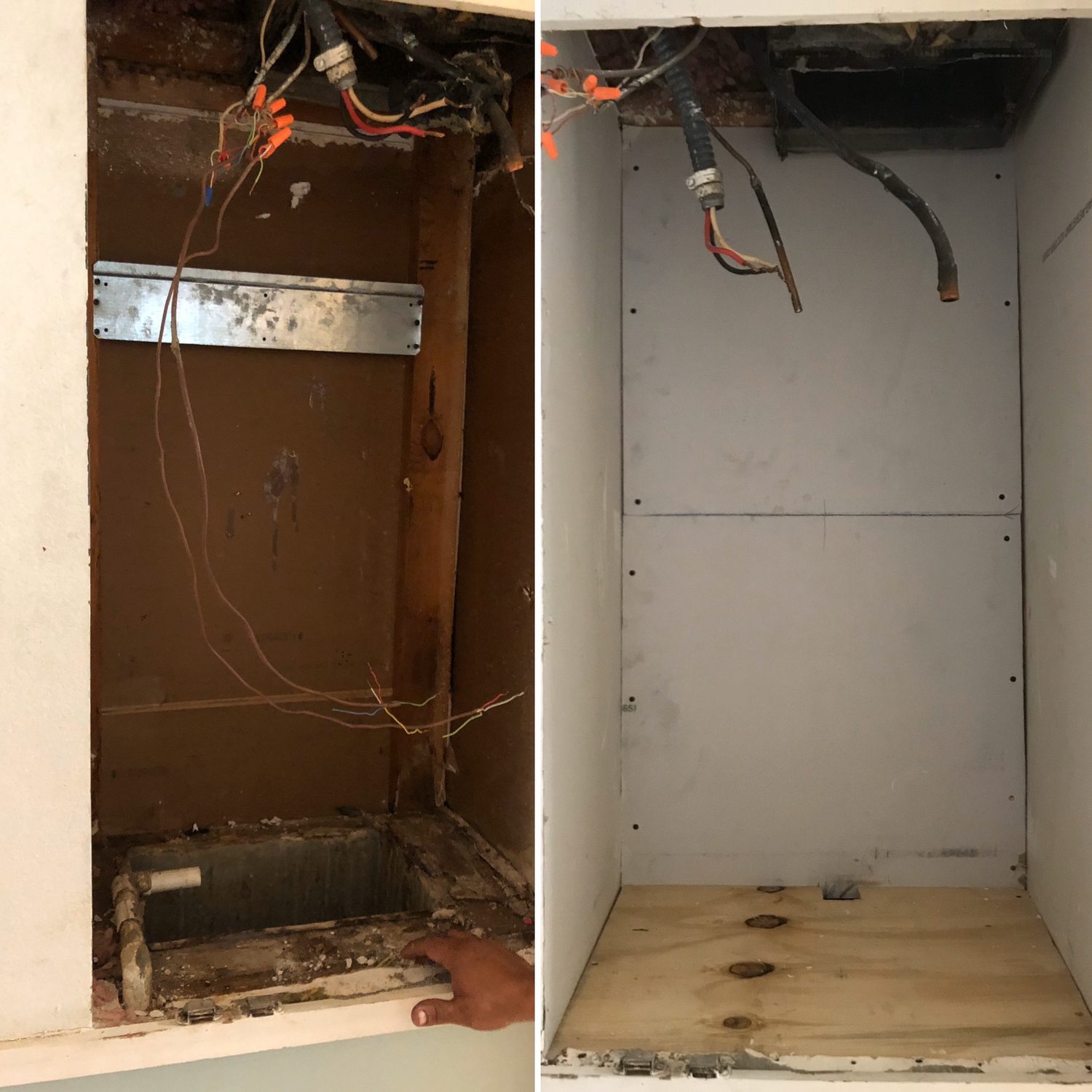
What a drain restriction turns into when nobody catches it early.
While we are on site, we also take a look at the water heater, its valves and connections, and the visible plumbing fixtures. Rust at the base of a tank, on its top fittings, or on valves and connections can be a sign of a slow leak, and over time it can lead to water damage to the floor, walls and anything stored nearby.
When we see corrosion at a level that could cause problems later, we note it so it can be scheduled and addressed before it becomes an emergency.
A yearly visit lets us spot early corrosion and small leaks around the water heater and visible plumbing before they turn into water damage, so repairs can be planned instead of rushed.
Visual check of accessible areas only. Hidden pipes and internal conditions are excluded; repairs are quoted separately.
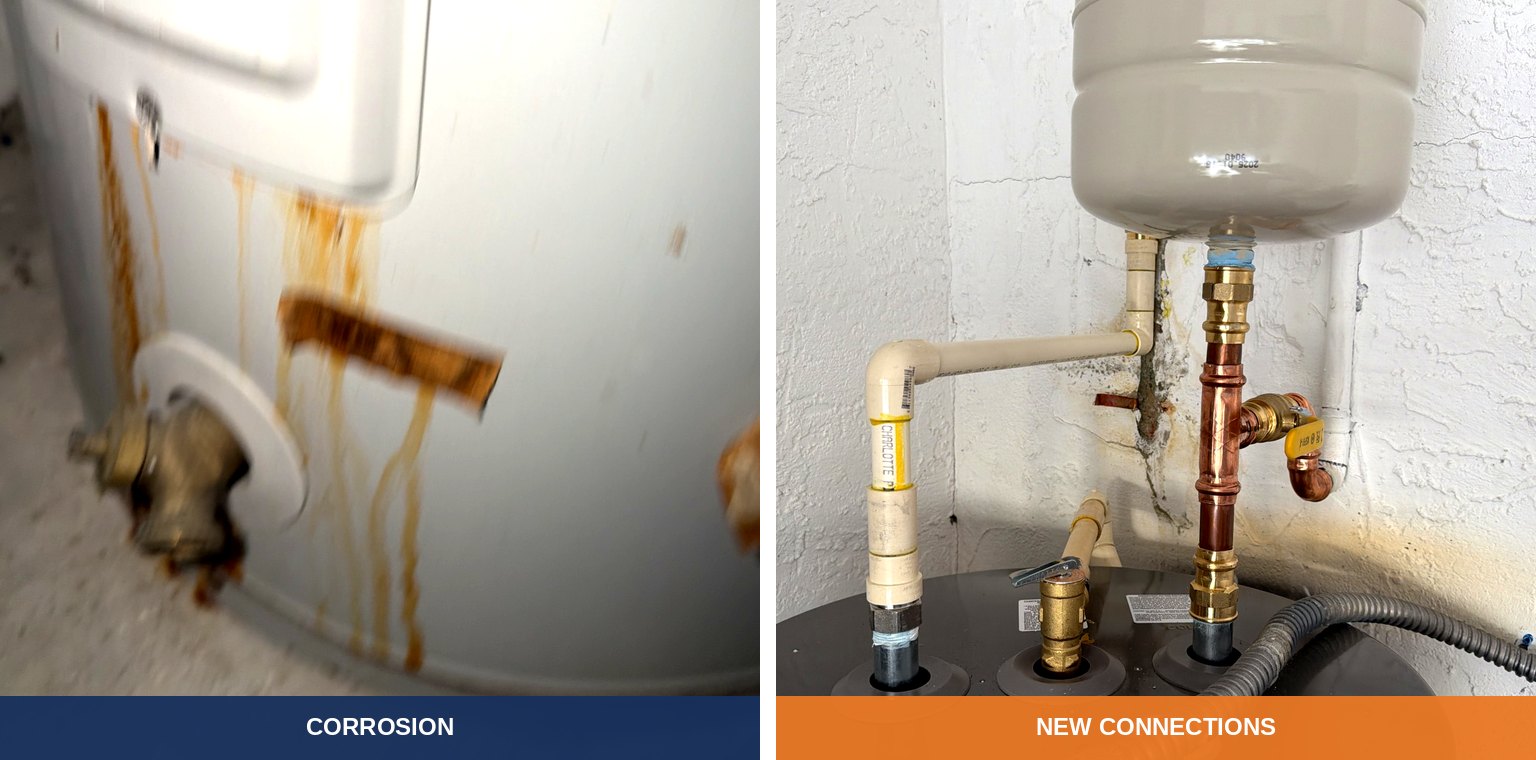
Corrosion at the top fittings of a tank, and the connections that replaced it.